The Word reached Korea before the missionary did.
A short walk through how the Bible entered Korea, was carried across a river by Korean hands, and changed a nation — then a conversation with a guide who knows the whole story.
The Word walked in on Korean feet
While Korea was still a closed country, a Scottish missionary named John Ross translated the Gospels into Korean from across the border in Manchuria — helped by Korean exiles, among them Sŏ Sang-ryun (서상륜). In Japan, a Korean convert named Yi Su-jeong (이수정) translated Mark.
So the gospel did not wait at the border for a Western missionary to carry it. Sŏ Sang-ryun (서상륜), the first Korean colporteur (traveling Bible distributor), carried Scripture back across the Yalu River into his own homeland.
Six books, one unbroken line
The history of the Bible in Korea is carried by six objects with firm dates — a sequence you can walk, not a vague idea. Each one is a step the text took toward every Korean hand.
Two stories on one axis
The Bible's story and the nation's story do not run in separate rooms — they move together. Read the gold rail and the slate rail side by side.
A book that changed the order of things
Impact is not a claim to make — it is something to show. This is the world the Bible entered — and what it left behind.
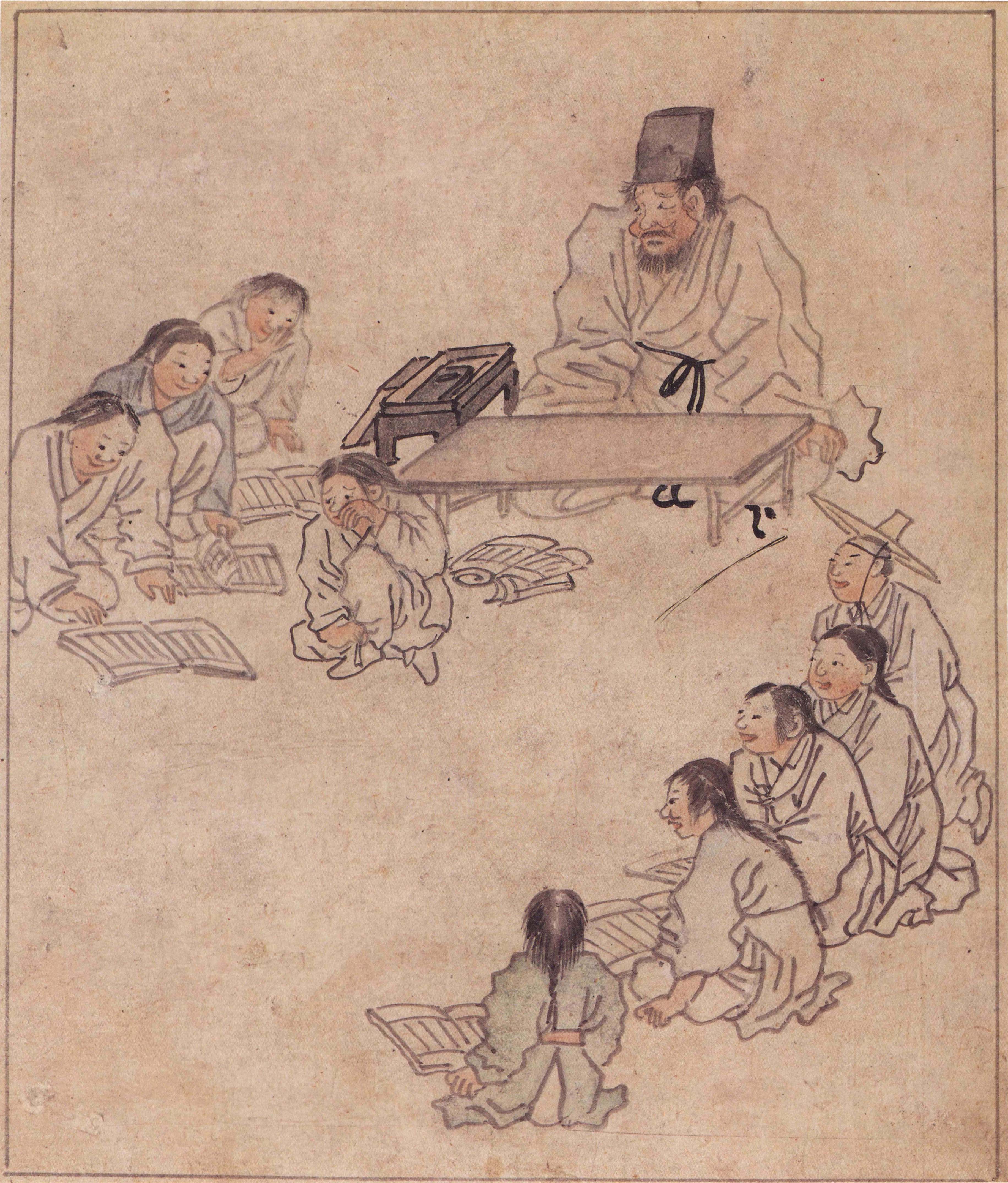
ⓘ Source
Kim Hong-do (김홍도) — gongu.copyright.or.kr, via Wikimedia Commons, Public Domain
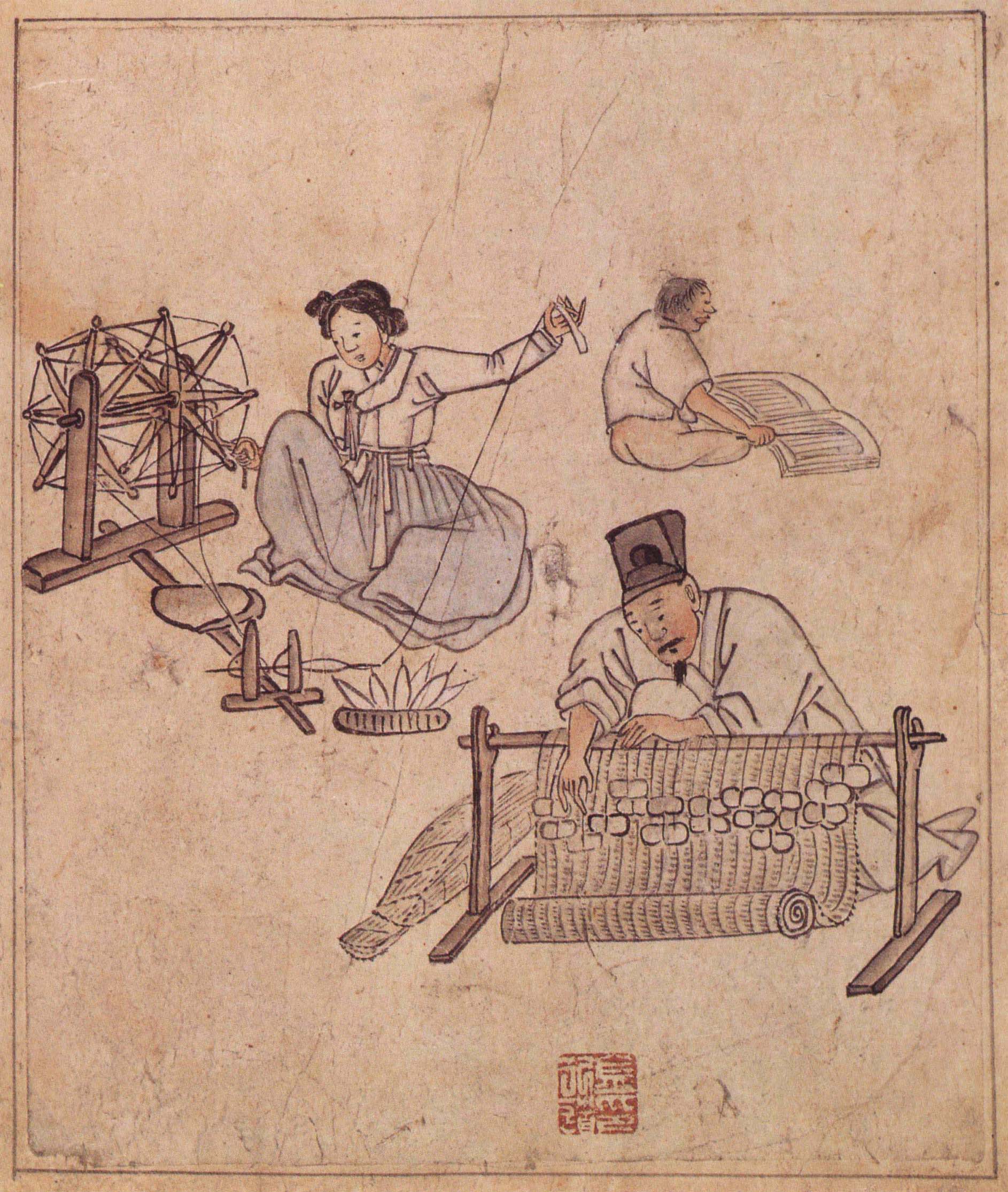
ⓘ Source
Kim Hong-do (김홍도) — gongu.copyright.or.kr, via Wikimedia Commons, Public Domain
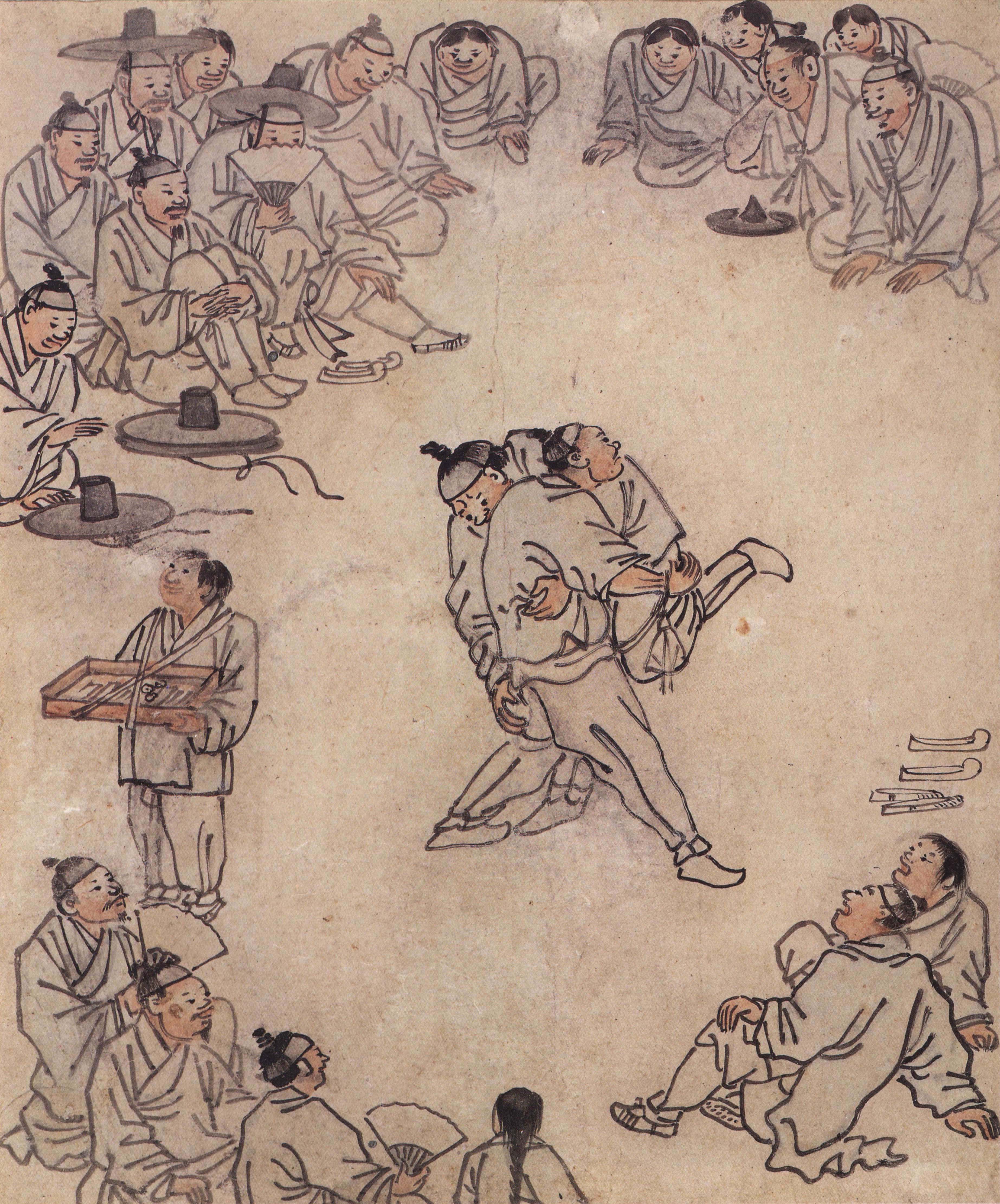
ⓘ Source
Kim Hong-do (김홍도) — gongu.copyright.or.kr, via Wikimedia Commons, Public Domain
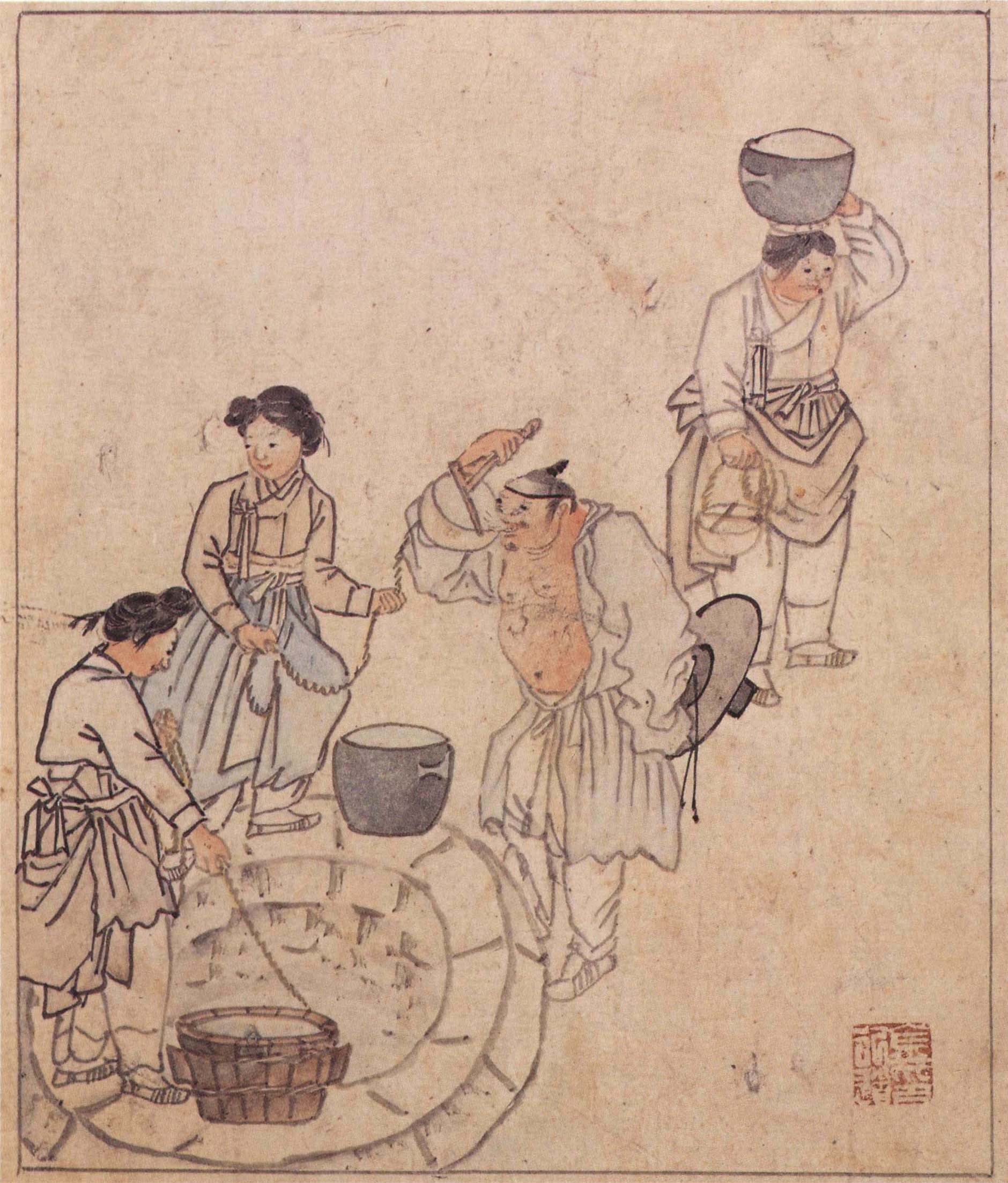
ⓘ Source
Kim Hong-do (김홍도) — gongu.copyright.or.kr, via Wikimedia Commons, Public Domain
A side door into public life
Joseon women did not enter mixed-gender public space — at all. So early Korean churches — Jeongdong First Methodist Church among them — built a separate side entrance, the yeoja ipgu (“women's entrance”), so women could come. It was not segregation; it was permission. Within a generation those entrances disappeared — and the women who had slipped in at the side had become teachers, leaders, and founders of Korea's first women's organizations.
Equal before God — in practice
Sangyeokkun (funeral bier carriers) were among the lowest laborers in Joseon: men who touched the dead, untouchable by association. Early Korean Christians, Sŏ Sang-ryun (서상륜) among them, ministered to these men. "Equal before God" was not an abstraction. It was visible in whom the church sat beside.
Women became agents of the text
Female colporteurs (traveling Bible distributors), called jeondobuin (“Bible women”), carried and sold Scripture in public: women as public agents of the text, in a society that had never permitted it. By the 1930s the gender curtain had come down and women sat in the front of the church. The book that everyone could now read in their own script quietly broke the old order of class and gender.
From receiving to sending
The country that received the gospel on one man's back now sends it out to the world.
That is the question the Seoul Bible Museum exists to hold open — to gather, preserve, and tell this story as global human heritage, in Seoul, for everyone who comes. The guide beside you has walked this whole story too — ask it anything, any time.