Framing 틀
Translation as Obedience 순종으로서의 번역
The Bible is the most translated book in human history — and that is not an accident of its size but of its nature. The historian Lamin Sanneh called Christianity a religion in translation: unlike traditions anchored to a sacred language — Hebrew, Arabic, Sanskrit — it has none, and from its earliest days it rendered its Scriptures into each people's own vernacular. Its translators understood this labor as obedience to a command recorded in Matthew's Gospel: "Go therefore and make disciples of all nations… teaching them." 성경은 인류 역사상 가장 많이 번역된 책입니다 — 이는 그 분량의 우연이 아니라 그 본질의 필연입니다. 역사가 라민 산네(Lamin Sanneh)는 그리스도교를 번역하는 종교라 불렀습니다: 히브리어, 아랍어, 산스크리트어처럼 하나의 거룩한 언어에 매인 다른 전통들과 달리, 그리스도교에는 그런 언어가 없었고, 가장 이른 시기부터 성경을 각 민족 고유의 언어로 옮겼습니다. 번역자들은 이 작업을 마태복음에 기록된 한 명령에 대한 순종으로 이해했습니다: "그러므로 너희는 가서 모든 민족을 제자로 삼아 … 가르치라."
Go deeper더 깊이 보기
The sixteenth-century Reformation, joined to the printing press, turned that impulse into a flood — from Erasmus's Greek text (1516) to Luther's German Bible and Tyndale's English, a movement that belonged to the whole church before it divided. Two centuries later, in 1792, William Carey argued the command still bound every generation, and the modern age of Bible translation began. That same conviction carried the Book across Asia — Jesuit, Catholic, and Protestant hands alike — and into Korean by 1882. A century later Korea, having received the Book, became one of the world's foremost senders of it. This museum does not ask you to share that conviction. It shows you what the conviction did — how the Word, in Sanneh's phrase, "became flesh" in tongue after tongue, and how much of the world, Korea included, first learned to read its own language from the Bible.
16세기 종교개혁은 인쇄기와 결합해 그 흐름을 거대한 물결로 바꾸었습니다 — 에라스무스의 그리스어 성경(1516년)에서 루터의 독일어 성경과 틴들의 영어 성경으로, 교회가 나뉘기 전 온 교회가 함께한 흐름이었습니다. 두 세기 뒤인 1792년, 윌리엄 캐리는 그 명령이 여전히 모든 세대를 구속한다고 주장했고, 근대 성경 번역의 시대가 시작되었습니다. 그 같은 확신이 성경을 아시아 전역으로 — 예수회, 가톨릭, 개신교의 손을 가리지 않고 — 1882년 한국어에까지 실어 날랐습니다. 한 세기 뒤, 성경을 받아들인 한국은 세계에서 가장 앞선 성경 발신국 중 하나가 되었습니다. 이 박물관은 그 확신을 함께 나누라고 요청하지 않습니다. 다만 그 확신이 무엇을 이루었는지를 보여 줄 뿐입니다 — 말씀이, 산네의 표현대로, 언어마다 어떻게 '육신이 되었는지', 그리고 한국을 포함한 세계의 많은 이들이 어떻게 성경을 통해 처음으로 자신의 언어를 읽는 법을 배웠는지를.
Three Waves, Three Centuries 세 번의 물결, 세 세기
Ordering Asia by first Protestant translation alone hides half the story — the Bible reached Japan in 1549 and Vietnam in 1651, centuries before any Protestant date on this wall, and Vietnam's first complete Bible was Catholic. The honest shape is three waves. 아시아를 최초 개신교 번역 순서로만 배열하면 이야기의 절반이 가려집니다 — 성경은 이 벽에 있는 어떤 개신교 연도보다 훨씬 앞선 1549년 일본과 1651년 베트남에 이미 도착해 있었고, 베트남의 첫 완역 성경은 가톨릭 성경이었습니다. 정직한 형태는 세 번의 물결입니다.
The nine rooms that follow trace Wave 2, nation by nation — chronologically by first Protestant translation. The order still surprises visitors who expect China or Japan to come first: it begins in the Indonesian archipelago, with a Dutch missionary and a Malay New Testament in 1668. 이어지는 9개 전시실은 2차 물결을 나라별로 따라갑니다 — 최초 개신교 번역 연도 순입니다. 이 순서는 중국이나 일본이 먼저라고 예상하는 방문객들을 여전히 놀라게 합니다: 1668년 네덜란드 선교사와 말레이어 신약성경과 함께 인도네시아 제도에서 시작됩니다.
Indonesia — First in Asia 인도네시아 — 아시아 최초
The first Protestant Bible translation in Asia was not in Chinese, Japanese, or Korean. It was in Malay — completed in 1668 by Albert Cornelius Ruyl and colleagues working under the Dutch East India Company in Batavia (modern Jakarta).아시아 최초의 개신교 성경 번역은 중국어, 일본어, 한국어가 아니었습니다. 말레이어였습니다 — 1668년 바타비아(현대의 자카르타)에서 네덜란드 동인도 회사 아래 일하는 루일과 동료들이 완성했습니다.
The full Malay Bible followed in 1733, translated by Melchior Leydekker. The Dutch colonial context shaped this translation's reach and limitations — but the Scripture itself crossed the colonial structures and spread through the archipelago's trade networks.완역 말레이어 성경이 1733년에 멜히오르 레이데커가 번역하여 뒤따랐습니다. 네덜란드 식민지 맥락이 이 번역의 도달과 한계를 형성했지만 — 성경 자체는 식민지 구조를 넘어 군도의 무역 네트워크를 통해 퍼졌습니다.
Indonesia's Catholic Bible took a different path from Vietnam's or Korea's. Fr. J. Bouma completed a Catholic New Testament (Ende, Flores, 1964), but the Church set that independent effort aside in 1968 to join the ecumenical Indonesian Bible Society project instead. The shared Terjemahan Baru (1974) became the base text; Lembaga Biblika Indonesia translated the Deuterocanonical books in 1976, and the Bishops' Conference recognized the combined edition as the Catholic Bible — a merger, not a separate translation.인도네시아의 가톨릭 성경은 베트남이나 한국과는 다른 길을 걸었습니다. 부마 신부가 가톨릭 신약성경을 완성했지만(엔데, 플로레스, 1964년), 교회는 1968년 그 독자적 작업을 접고 에큐메니컬 성서공회 사업에 합류했습니다. 공동 번역본인 신역성서(1974년)가 기본 본문이 되었고, 인도네시아 성서학회가 1976년 제2경전을 번역했으며, 주교회의가 그 통합본을 가톨릭 성경으로 인정했습니다 — 별도의 번역이 아니라 하나로 합쳐진 결과입니다.
India — Ziegenbalg and the Tamil Bible 인도 — 지겐발크와 타밀어 성경
Public domain ↗
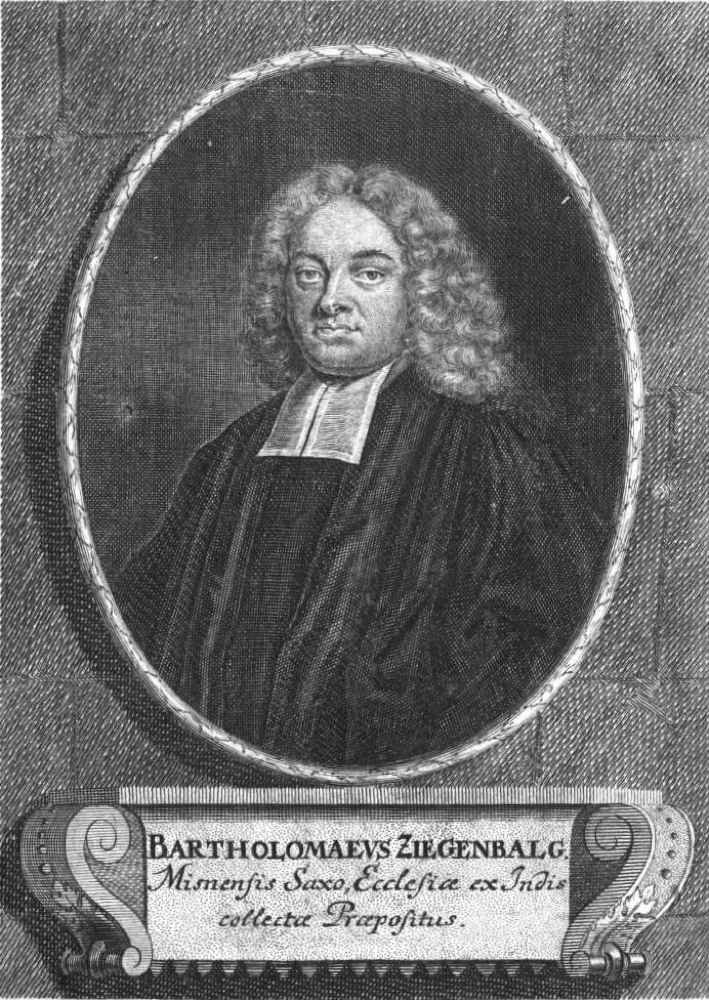
Bartholomäus Ziegenbalg — a 22-year-old German Lutheran — arrived in Tranquebar (Tamil Nadu) in 1706 as the first Protestant missionary to India. Within two years he had learned Tamil and begun translating the New Testament. He completed it in 1714. The full Bible followed in 1727.22세의 독일 루터교인 지겐발크(Bartholomäus Ziegenbalg)가 1706년 인도 최초의 개신교 선교사로 타랑가암바디(타밀나두)에 도착했습니다. 2년 안에 타밀어를 배우고 신약성경 번역을 시작했습니다. 1714년 완성했습니다.
Ziegenbalg was also the first to print in an Indian language, setting up a printing press at the mission. He died in 1719, at age 35, before seeing the full Bible completed. His colleague Benjamin Schultze carried the work forward and completed the full Tamil Bible in 1727 — eight years after Ziegenbalg's death. His Tamil dictionary and grammar remain scholarly references. He is considered the founder of Indian Protestant Christianity.지겐발크는 또한 인도 언어로 최초로 인쇄한 사람으로, 선교부에 인쇄기를 설치했습니다. 1719년 35세에 완역 성경이 완성되는 것을 보지 못하고 세상을 떠났습니다. 동료 벤야민 슐체가 작업을 이어받아 지겐발크 사후 8년 만인 1727년 타밀어 완역 성경을 완성했습니다. 그의 타밀어 사전과 문법서는 학술 참고 자료로 남아 있습니다. 그는 인도 개신교 기독교의 창시자로 여겨집니다.
Tamil's Catholic Bible arrived even later than Vietnam's or Korea's, and by a different route: no separate Catholic-only Tamil Bible was ever completed. The Tiruviviliyam (1995, Madurai) — 22 years in the making under the Tamil Nadu Bishops' Council's Biblical Commission — is a joint Catholic–Protestant translation from Hebrew and Greek, used by both traditions today.타밀어의 가톨릭 성경은 베트남이나 한국보다도 늦게, 다른 경로로 도착했습니다: 가톨릭 단독의 타밀어 완역 성경은 끝내 나오지 않았습니다. 티루비빌리얌(1995년, 마두라이) — 타밀나두 주교협의회 성서위원회가 22년에 걸쳐 만든 — 은 히브리어와 그리스어에서 옮긴 가톨릭·개신교 공동 번역본으로, 오늘날 두 전통 모두가 사용합니다.
China — Morrison and the Hidden Dictionary 중국 — 모리슨과 숨겨진 사전
Public domain ↗
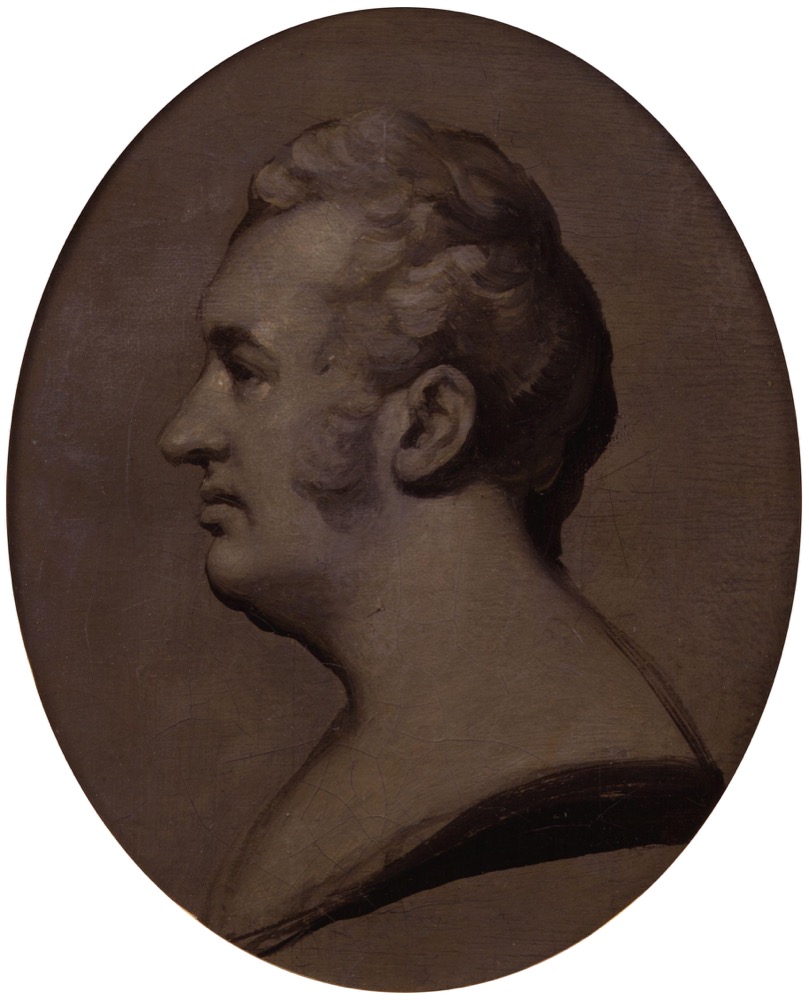
Robert Morrison arrived in Canton in 1807 — the first Protestant missionary to China. Teaching Chinese to foreigners was illegal, punishable by death for the teacher. Morrison learned in secret, hiding his Chinese dictionary from authorities. He worked at the East India Company as a translator by day and translated the Bible at night.로버트 모리슨(Robert Morrison)이 1807년 광저우에 도착했습니다 — 중국 최초의 개신교 선교사. 외국인에게 중국어를 가르치는 것은 불법이었고 교사에게 사형으로 처벌받았습니다. 모리슨은 비밀리에 배우며 당국으로부터 중국어 사전을 숨겼습니다.
The New Testament was completed in 1814. With colleague William Milne (working in Malacca, since neither could operate freely in China), Morrison completed the full Chinese Bible in 1823. His Chinese-English dictionary — six volumes — remained a standard reference for decades. Morrison spent 27 years in China. He baptized ten people.신약성경이 1814년에 완성되었습니다. 동료 윌리엄 밀른과 함께(중국에서 자유롭게 활동할 수 없어 말라카에서 작업) 모리슨은 1823년 완역 중국어 성경을 완성했습니다.
Mongolia — The Translation Nobody Knows 몽골 — 알려지지 않은 번역 이야기
Edward Stallybrass and William Swan of the London Missionary Society translated the Mongolian New Testament in 1827 and the full Bible by 1840. They could not work in Mongolia itself — it was inaccessible to Westerners — so they operated from Siberia, across the Russian border, translating a language they learned from Mongolian exiles and traders.런던선교회의 에드워드 스탈리브래스와 윌리엄 스완이 1827년 몽골어 신약성경, 1840년 완역 성경을 번역했습니다. 몽골 자체에서 작업할 수 없었습니다 — 서양인들이 접근 불가능했습니다 — 러시아 국경 너머 시베리아에서 몽골 망명자들과 상인들에게서 배운 언어로 번역했습니다.
The cost was personal. They worked from the mission station at Selenginsk — deep in Siberia, where winters fell to -40°C and the nearest town was days away. William Swan's health gave out before the full Bible was finished; he returned to Britain, leaving Stallybrass to complete the translation largely alone. The Mongolians Stallybrass was translating for lived across a border he was never permitted to cross. He spent years rendering Scripture for a people he could rarely meet, in a climate that nearly killed him, in a language he had learned from exiles. The Bible was completed in 1840. Stallybrass remained in Siberia another decade.대가는 개인적인 것이었습니다. 두 사람은 시베리아 깊숙이, 영하 40도까지 떨어지고 가장 가까운 마을도 며칠 거리인 셀렝긴스크 선교 기지에서 작업했습니다. 윌리엄 스완의 건강이 완역 성경이 완성되기 전에 무너졌습니다; 그는 영국으로 돌아갔고, 스탈리브래스 혼자 번역을 마무리했습니다. 번역 대상인 몽골인들은 그가 결코 건널 수 없는 국경 너머에 살고 있었습니다. 그는 거의 만날 수 없는 사람들을 위해, 거의 죽을 뻔한 기후 속에서, 망명자들에게 배운 언어로 수년간 성경을 번역했습니다. 성경은 1840년에 완성되었습니다. 스탈리브래스는 10년을 더 시베리아에 머물렀습니다.
That 1840 Bible was in Classical Mongolian script. Mongolia's Catholic story took a different path — the ecumenical-merger path, like Tamil's and Indonesia's. A modern Cyrillic-script Bible from the Mongolian Union Bible Society (New Testament 1996, complete 2000) is now shared by Protestants, Catholics, and Russian Orthodox alike — all member bodies of the same Bible Society. A distinctly Catholic edition is still being built: in February 2023, Cardinal Giorgio Marengo, head of Mongolia's small Catholic Church, signed an agreement with the Bible Society to translate the Deuterocanonical books and eventually publish a Catholic Bible.1840년의 그 성경은 고전 몽골 문자로 쓰였습니다. 몽골의 가톨릭 이야기는 다른 길 — 타밀어와 인도네시아어처럼 에큐메니컬 통합의 길 — 을 걸었습니다. 몽골성서공회의 현대 키릴 문자 성경(신약 1996년, 완역 2000년)은 이제 개신교, 가톨릭, 러시아 정교회가 함께 사용합니다 — 모두 같은 성서공회의 회원 교단입니다. 가톨릭만의 판본은 아직 만들어지는 중입니다: 2023년 2월, 몽골의 작은 가톨릭 교회를 이끄는 조르조 마렌고 추기경이 성서공회와 협약을 맺고 제2경전 번역과 가톨릭 성경 출간을 추진하기로 했습니다.
Myanmar — The Pillow 미얀마 — 베개
Public domain ↗
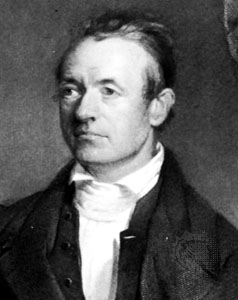
Adoniram Judson — American Baptist, the first American Protestant missionary to Asia — arrived in Burma in 1813. He spent years learning Burmese before translating. In 1824, during the First Anglo-Burmese War, he was arrested and imprisoned for 17 months under brutal conditions — accused of being a spy.아메리칸 침례교인 아도니람 저드슨(Adoniram Judson) — 아시아 최초의 미국 개신교 선교사 — 이 1813년 버마에 도착했습니다. 수년간 버마어를 배운 후 번역을 시작했습니다. 1824년 제1차 영-버마 전쟁 중 간첩 혐의로 체포되어 17개월 동안 가혹한 조건에서 투옥되었습니다.
His translation manuscript was hidden in a pillow — so dirty and disreputable-looking that the guards ignored it. His wife Ann smuggled food to him and protected the manuscript. Judson survived. The manuscript survived. The Burmese Bible was completed in 1840. Judson's Burmese dictionary remained the standard reference for decades.그의 번역 원고는 베개 안에 숨겨졌습니다 — 너무 더럽고 형편없어 보여 간수들이 무시했습니다. 그의 아내 앤이 음식을 반입하고 원고를 보호했습니다. 저드슨은 살아남았습니다. 원고도 살아남았습니다.
Catholics were here first, textually. Giovanni Maria Percoto rendered the Lord's Prayer into Burmese in 1776, and fellow Barnabite Giuseppe d'Amato produced Scripture Extracts in 1811 — printed, in a small irony, by British Baptist missionaries Felix Carey and James Chater, who passed the vocabulary on to Judson himself. No complete Catholic Bible has followed: the Catholic Bishops' Conference of Myanmar published a New Testament with Psalms, Proverbs, and the Deuterocanonical books in 2012, but the whole Bible remains unfinished.가톨릭이 본문상으로는 이곳에 먼저 와 있었습니다. 조반니 마리아 페르코토가 1776년 주기도문을 버마어로 옮겼고, 동료 바르나바회 선교사 주세페 다마토가 1811년 "성경 발췌(Scripture Extracts)"를 펴냈습니다 — 작은 아이러니지만, 영국 침례교 선교사 펠릭스 캐리와 제임스 체이터가 인쇄했고, 그 어휘가 저드슨 본인에게까지 전해졌습니다. 완역 가톨릭 성경은 아직 나오지 않았습니다: 미얀마 주교회의가 2012년 신약성경과 시편·잠언·제2경전을 펴냈지만, 성경 전체는 여전히 미완성입니다.
Thailand — Gützlaff's Connecting Thread 태국 — 귀츨라프(Gützlaff)의 연결 고리
Karl Gützlaff — German missionary — translated the Thai New Testament in 1834 while working in Siam. He was also a prolific traveler who carried Bibles across the region. His connection to Korea is direct: in 1832, two years before his Thai New Testament, he sailed along the Korean coast distributing Chinese Bibles and reporting to the West that Koreans seemed open to receiving them.독일 선교사 칼 귀츨라프가 시암에서 일하며 1834년 태국어 신약성경을 번역했습니다. 그는 또한 지역 전반에 성경을 전달한 왕성한 여행가였습니다. 한국과의 연결은 직접적입니다: 1832년, 태국어 신약성경보다 2년 전에, 그는 한국 해안을 항해하며 중국어 성경을 배포했습니다.
Thailand's Catholic Bible followed the same pattern as Vietnam's, China's, Japan's, and Korea's — a separate translation, much later. Salesian missionaries began their own Thai Catholic Bible in 1992; the complete translation was finally published in 2015, 121 years after the Protestant one.태국의 가톨릭 성경은 베트남·중국·일본·한국과 같은 패턴을 따랐습니다 — 별도의 번역, 훨씬 나중에. 살레시오회 선교사들이 1992년 독자적인 태국어 가톨릭 성경 작업을 시작했고, 완역본은 개신교 성경보다 121년 뒤인 2015년에야 출간되었습니다.
Japan — Same Decade, Different Trajectory 일본 — 같은 시대, 다른 궤적
The full Japanese Bible was completed in 1887 — the same decade as the Korean translations. Protestant missions in Japan and Korea began in the same era. The connection runs deeper than chronology: Yi Su-jeong (이수정), the Korean scholar who translated the Gospel of Mark into Korean, did so in Tokyo in the 1880s — working within the same missionary environment, using the American Bible Society's Tokyo offices, that was simultaneously producing the Japanese Bible. Korea's Bible story and Japan's are not parallel tracks; they share a city, a decade, and a man. But the outcomes diverged dramatically. In Korea: explosive growth across every social stratum. In Japan: Christianity remained a small intellectual minority — less than 1% of the population today after 150 years of Protestant presence.완역 일본어 성경이 1887년에 완성되었습니다 — 한국어 번역과 같은 10년 안에. 일본과 한국의 개신교 선교는 같은 시대에 시작되었습니다. 연결은 연대기보다 더 깊습니다: 한국어 마가복음을 번역한 이수정은 1880년대 도쿄에서 작업했습니다 — 일본어 성경을 동시에 만들어내던 것과 같은 선교 환경, 미국성서공회 도쿄 사무소를 사용하면서. 한국과 일본의 성경 이야기는 평행 선로가 아닙니다; 하나의 도시, 하나의 10년, 그리고 한 사람을 공유합니다. 그러나 결과는 극적으로 갈라졌습니다. 한국: 모든 사회 계층에서 폭발적 성장. 일본: 기독교는 소수 지식인 집단에 머물렀습니다.
Why the difference? Historians point to several factors: Japan's pre-existing national religion (Shintoism tied to imperial identity); the lack of a vernacular literacy gap (kanji literacy was already distributed differently); the nature of the social disruption the Bible's ideas represented in each context. The comparison raises the question that guides this wing: what does the reception of Scripture depend on?왜 다를까요? 역사가들은 여러 요인을 지적합니다: 일본의 기존 민족 종교(천황 정체성과 연결된 신도), 다른 방식으로 분포된 문해력, 각 맥락에서 성경의 사상이 대표하는 사회적 혼란의 성격.
Philippines — A Late Arrival 필리핀 — 늦은 도착
The Philippines comes last among the nine nations before Vietnam — not because Scripture arrived late, but because Protestant Scripture arrived late. Spanish Catholic missionaries had been in the Philippines since 1565 — 300 years before the American colonial period began in 1898 and opened the door to Protestant missions.필리핀이 베트남 이전 9개국 중 마지막에 오는 것은 성경이 늦게 도착해서가 아니라 — 개신교 성경이 늦게 도착했기 때문입니다. 스페인 가톨릭 선교사들은 1565년부터 필리핀에 있었습니다 — 1898년 미국 식민 시대가 시작되어 개신교 선교의 문이 열리기 300년 전부터.
The full Tagalog Bible appeared in 1905. The Philippines is the only country in the nine where Protestant Christianity arrived in the context of an already deeply Christian society — with all the complexity that entails.완역 따갈로그어 성경이 1905년에 나왔습니다. 필리핀은 9개국 중 유일하게 이미 깊은 기독교 사회 맥락에서 개신교 기독교가 도착한 나라입니다.
Vietnam — Most Recent of the Nine 베트남 — 9개국 중 가장 최근
The complete Protestant Vietnamese Bible was finished in 1925 — the most recent of the nine nations in this wing. Translated by William Cadman of the Christian and Missionary Alliance (CMA), the work took decades. Like several translations in this wing, it was completed in the context of colonial rule — in this case, French Indochina.개신교 완역 베트남어 성경이 1925년에 완성되었습니다 — 이 관의 9개국 중 가장 최근입니다. 기독교선교연맹(CMA)의 윌리엄 캐드먼이 번역했으며 수십 년이 걸렸습니다. 이 관의 여러 번역처럼 식민 통치 맥락에서 완성되었습니다 — 이 경우 프랑스령 인도차이나.
The 1925 CMA Bible is the Protestant completion — which is why Vietnam sits last in this hall, ordered by first Protestant translation. But the first complete Vietnamese Bible was Catholic: Albert Schlicklin (Cố Chính Linh) of the Paris Foreign Missions Society translated it from the Latin Vulgate in 1916 (see Wave 3 above).1925년 CMA 성경은 개신교 완역이며, 이 관이 "최초 개신교 번역 순서"로 배열되어 있어 베트남이 마지막에 놓인 것입니다. 그러나 베트남 최초의 완역 성경은 가톨릭 성경이었습니다 — 파리외방전교회의 알베르 슐리클랭(꼬 찐 링)이 라틴어 불가타에서 옮겨 1916년에 완성했습니다(위 3차 물결 참조).
Vietnam's Christian story is complex: Catholic missions (from the 16th century, under French protection) preceded Protestants by centuries. The CMA arrived in 1911. A complete Bible reached Vietnamese readers first in 1916 (Catholic), then 1925 (Protestant) — and it has been a contested, suppressed, and persevered-through text ever since.베트남의 기독교 이야기는 복잡합니다: 가톨릭 선교(16세기부터 프랑스 보호 아래)가 개신교보다 수세기 앞섰습니다. CMA가 1911년에 도착했습니다. 완역 성경은 1916년(가톨릭)에 먼저, 그리고 1925년(개신교)에 베트남 자국어로 도달했습니다 — 그 이후로 이 성경은 논쟁과 탄압 속에서도 끈질기게 이어져 왔습니다.
Living Languages of Asia아시아의 살아 있는 언어
The nine rooms behind you tell where translation began. This new gallery asks where the Bible can be heard today—in the language of home, memory, prayer, and dreams—and makes visible the work that is still unfinished across Asia. 지나온 아홉 전시실은 번역이 어디에서 시작되었는지를 보여 줍니다. 이 새로운 전시는 오늘날 성경이 가정과 기억, 기도와 꿈의 언어로 어디에서 들리는지를 묻고, 아시아 전역에 아직 남아 있는 미완의 과제를 눈에 보이게 합니다.
North Korea — The Night Falls 북한 — 어둠이 내리다
You have just traveled from Indonesia in 1668 to Vietnam in 1925 — nine nations, 257 years, the Bible moving steadily across a continent. This room closes the wing somewhere that story has not finished moving. Wing 3 ended in 1945 with 300,000 Christians in the north and the Jerusalem of the East standing in Pyongyang. This room begins the day after. What happened to those Christians — and to the Bible they carried — when the night came down. 방금 1668년 인도네시아에서 1925년 베트남까지 — 9개 나라, 257년 동안 대륙을 가로질러 꾸준히 움직인 성경의 여정을 지나왔습니다. 이 전시실은 아직 그 이야기가 끝나지 않은 곳에서 제4관을 닫습니다. 제3관은 북부에 30만 명의 기독교인이 있고 동방의 예루살렘이 평양에 서 있는 1945년에서 끝났습니다. 이 전시실은 그 다음 날부터 시작합니다. 어둠이 내려앉았을 때 그 기독교인들과 그들이 지닌 성경에 무슨 일이 일어났는지.
1945 — 1950s 1945 — 1950년대
Under Kim Il-sung (김일성), churches were systematically closed. Christians were required to renounce their faith or face imprisonment, labor camps, or execution. Bibles were confiscated. Public worship ceased. The Jerusalem of the East was dismantled building by building, congregation by congregation. The Korean War (1950–53) completed the destruction: what remained of northern Christian infrastructure was bombed or disbanded, and the surviving Christian community fled south — carrying their faith to Seoul, where they would help build some of the largest churches in the world. 김일성 치하에서 교회들이 체계적으로 폐쇄되었습니다. 기독교인들은 신앙을 포기하거나 감옥, 노동 수용소, 처형에 직면해야 했습니다. 성경이 몰수되었습니다. 공개 예배가 중단되었습니다. 동방의 예루살렘이 건물마다, 교회마다 해체되었습니다. 한국전쟁(1950–53)이 파괴를 완성했습니다: 북한의 남은 기독교 기반 시설은 폭격되거나 해산되었고, 살아남은 기독교 공동체는 남쪽으로 피난했습니다 — 신앙을 서울로 가져가 세계 최대 교회 중 일부를 세우는 데 기여했습니다.
Underground — The Stump Believers (그루터기 신자들) 지하 — 그루터기 신자들
Some did not renounce. They became "stump believers" — hidden remnants, like the stump of a tree that has been cut down but still holds roots. They prayed in whispers. They memorized Scripture because they had no books. They gathered in ones and twos. The church went underground and stayed there for decades. Their descendants are still there today — estimated at 200,000 to 400,000. 일부는 포기하지 않았습니다. 그들은 '그루터기 신자들'이 되었습니다 — 잘린 나무의 그루터기처럼 여전히 뿌리를 지닌 숨겨진 남은 자들. 속삭임으로 기도했습니다. 책이 없어 성경을 암송했습니다. 하나둘씩 모였습니다.
1988 — State Churches 1988 — 국가 교회
In 1988, two state-sponsored churches were opened in Pyongyang: Bongsu Church (봉수교회) and Chilgol Church (칠골교회 — on the site where the mother of Kim Il-sung (김일성) reportedly worshipped). Their existence does not resolve the status of the underground church. They are a diplomatic gesture, not a religious opening. 1988년 두 국가 후원 교회가 평양에 문을 열었습니다: 봉수교회와 칠골교회. 그 존재가 지하 교회의 상황을 해결하지는 않습니다. 외교적 제스처이지 종교적 개방이 아닙니다.
2 Timothy 2:9 / 디모데후서 2:9
This room is remembered with lament and hope — not advocacy or political analysis. Wing 4 closes here: the continent where the Bible's journey began in the 1600s still has a nation where owning one is a crime today. 이 전시실은 정치적 분석이 아닌 애도와 소망으로 기억합니다. 제4관은 여기서 닫힙니다: 1600년대에 성경의 여정이 시작된 대륙에는 오늘날에도 성경을 소유하는 것이 범죄인 나라가 여전히 있습니다.