The Bible in Everyday Speech 일상어 속의 성경
The clearest sign that the Bible has become cultural, not only religious, is that its phrases are spoken by Koreans who never enter a church — the same way "the writing on the wall" or "a drop in the bucket" work in English. The language itself absorbed the book. 성경이 종교를 넘어 문화가 되었다는 가장 뚜렷한 증거는, 교회에 다니지 않는 한국인들도 그 표현을 일상적으로 쓴다는 것입니다 — 영어에서 "the writing on the wall"이나 "a drop in the bucket"이 그렇듯이 말입니다. 언어 자체가 이 책을 흡수했습니다.
And more in everyday circulation: 가룟 유다 (a Judas, a betrayer), 노아의 방주 (Noah's Ark), 바벨탑 (the Tower of Babel), 에덴 (Eden), 금단의 열매 (forbidden fruit), 아마겟돈 (Armageddon) — proper nouns that need no explanation to a Korean reader, believer or not. 그 밖에도 일상에서 흔히 쓰이는 말들: 가룟 유다(배신자), 노아의 방주, 바벨탑, 에덴, 금단의 열매, 아마겟돈 — 믿음과 상관없이 별다른 설명 없이도 통하는 고유명사들입니다.
The Bible in Korean Art 한국 미술 속의 성경
The exhibition's centerpiece is a painting series this museum cannot show you directly — and that restraint is itself part of respecting the artist's own legacy. 이 전시의 중심은 이 박물관이 직접 보여드릴 수 없는 회화 연작입니다 — 그리고 그 자제 자체가 화가의 유산을 존중하는 한 방식입니다.
Kim Ki-chang (김기창, 1913/14–2001), pen name Unbo (운보), one of modern Korea's master painters, created 《예수의 생애》 (The Life of Christ) — 30 paintings, made in 1952–53 while sheltering with his mother-in-law's family in Gunsan during the Korean War, at an American missionary's suggestion. He set the whole Gospel in Joseon-era Korea: Jesus wears a 갓 and durumagi, the Virgin Mary wears hanbok, the disciples are in Korean dress, the nativity happens among thatched-roof houses, and angels appear as Korean heavenly maidens rather than the Western winged figure. It is often called Korea's first Christian sacred-painting series. Kim first exhibited the series at Seoul's Whasin Gallery in 1954. 운보 김기창(1913/14–2001)은 한국 근현대 화단의 거장으로, 6·25 전쟁 중 군산 처가에 몸을 의탁하던 1952–53년, 한 미국인 선교사의 권유로 《예수의 생애》 30점을 그렸습니다. 그는 복음서 전체를 조선 시대 한국으로 옮겨 놓았습니다: 갓과 두루마기를 입은 예수, 한복을 입은 성모 마리아, 한국 옷을 입은 제자들, 초가집들 사이에서 일어나는 예수 탄생, 서양식 날개 달린 천사 대신 등장하는 한국의 선녀들. 흔히 한국 최초의 기독교 성화 연작으로 불립니다. 김기창은 1954년 서울 화신화랑에서 이 연작을 처음 선보였습니다.
The series later travelled: all 30 works were lent to the Deutsches Historisches Museum (German Historical Museum) in Berlin for "The Luther Effect" (12 April – 5 November 2017), the flagship exhibition marking the Reformation's 500th anniversary — shown in the section on South Korea as a heartland of world Protestantism, with German President Frank-Walter Steinmeier attending the opening. Bible → Korea → world, made visible in paint. 이 연작은 이후 독일로도 건너갔습니다: 30점 전체가 종교개혁 500주년 기념 대표 전시인 베를린 독일역사박물관의 "루터 이펙트"전(2017년 4월 12일–11월 5일)에 대여되어, 세계 개신교의 한 중심지로서 한국을 조명하는 섹션에 전시되었습니다. 개막식에는 프랑크발터 슈타인마이어 독일 연방대통령이 참석했습니다. 성경에서 한국으로, 그리고 세계로 — 붓으로 그려진 여정입니다.
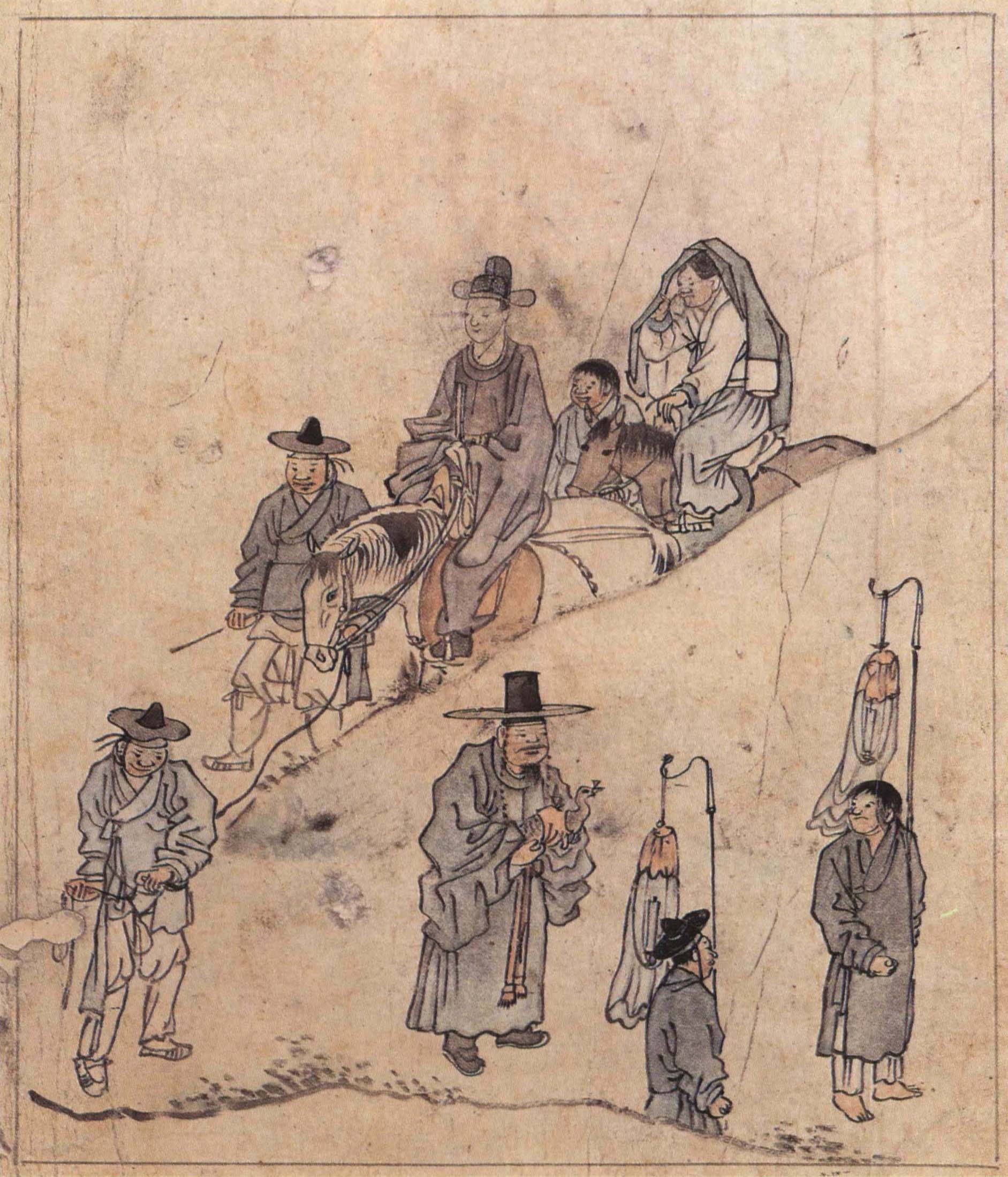
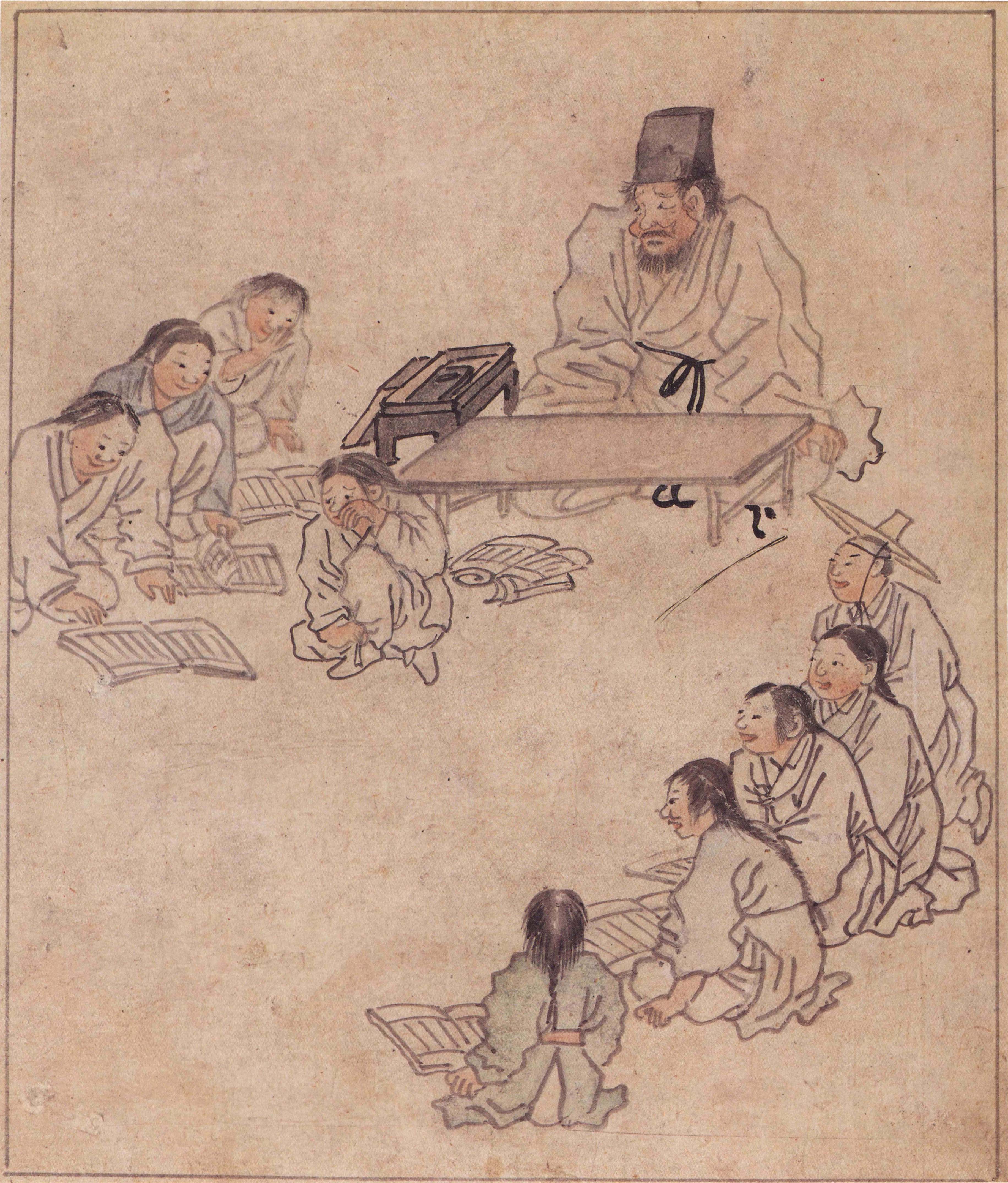
Historical context—not paintings from the protected series by Kim Ki-chang (김기창). 조선 시대의 시각적 어휘
김기창의 저작권 보호 연작이 아닌 역사적 배경 자료입니다.
ⓘ Source
Wikimedia Commons · Public domain
ⓘ Source
Wikimedia Commons · Public domain
Kim Ki-chang (김기창) died in 2001; The Life of Christ remains under copyright, so this museum does not reproduce it here. To see the paintings up close, visit the Seosomun Shrine History Museum in Seoul, which has hosted the series in its own special exhibitions (seosomun.org — special exhibitions). 김기창은 2001년 별세했으며, 《예수의 생애》는 여전히 저작권의 보호를 받고 있어 이 박물관은 이를 직접 게재하지 않습니다. 작품을 직접 보시려면, 이 연작을 특별전으로 소개해 온 서울 서소문성지 역사박물관(seosomun.org — 특별전시)을 참고해 주세요.
Literature and Song문학과 노래
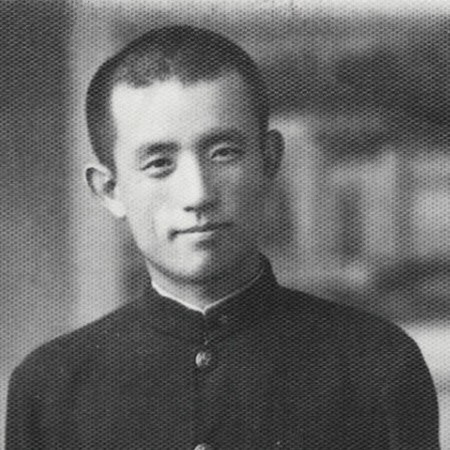
The Bible is a standing source in modern Korean letters — most beloved in Yun Dong-ju (윤동주, 1917–1945), whose poems thread Christian imagery of light, darkness, and sacrifice, blended with Confucian reference. And the language runs through Korean music too: from 찬송가 (hymnody, itself a shared songbook across denominations) to a large contemporary Christian-music (CCM) and gospel scene — and, plainly, into secular pop, where a Sermon-on-the-Mount phrase named a mainstream 1980s–90s band: 빛과 소금 (bit-gwa sogeum). 성경은 한국 현대 문학의 한결같은 원천입니다 — 그 중에서도 가장 사랑받는 이는 윤동주(1917–1945)로, 그의 시는 빛과 어둠과 희생이라는 기독교적 심상을 유교적 정서와 함께 엮어 냈습니다. 그리고 이 언어는 한국 음악에도 흐릅니다: 여러 교단이 함께 쓰는 찬송가부터 오늘날의 대규모 CCM·가스펠 씬까지 — 그리고 분명히, 세속 대중음악에도 — 산상수훈의 한 구절이 1980–90년대 인기 그룹의 이름이 되었습니다: 빛과 소금.
Photograph: unknown photographer, 1942 · 사진: 작자 미상, 1942년 · Wikimedia Commons · Public domain
The Book in Korean Life 한국인의 삶 속의 그 책
Yun Dong-ju's poetry, just now, is one thread — literature. Here are five more: how the Bible entered the way Koreans watch, dress, eat, gather, and reckon with truth. Each begins with the Bible's own words, then the verified Korean story that followed. 방금 만난 윤동주의 시는 하나의 실 — 문학입니다. 여기 다섯 가닥이 더 있습니다: 성경이 한국인이 보고, 입고, 먹고, 모이고, 진리를 마주하는 방식 속으로 들어온 이야기입니다. 각 이야기는 성경 본문 그 자체로 시작해, 그 뒤를 따른 검증된 한국사로 이어집니다.
서로 친절하게 하며 불쌍히 여기며 서로 용서하기를 하나님이 그리스도 안에서 너희를 용서하심과 같이 하라
"Be kind and compassionate to one another, forgiving each other, just as in Christ God forgave you."
— Ephesians 4:32 (NIV) · 에베소서 4:32 (개역개정)
Korean cinema's most acclaimed wrestling with grace and forgiveness is 밀양 (Secret Sunshine, 2007, dir. Lee Chang-dong) — a grieving mother confronts the possibility that God may forgive the man she cannot. Jeon Do-yeon won Best Actress at Cannes 2007, carrying the question to the world stage. A different kind of witness: 울지마 톤즈 (Don't Cry for Me, Sudan, 2010), a documentary on Fr. Lee Tae-seok's (이태석) medical mission in South Sudan, moved Korean audiences with a life patterned on "the Son of Man came not to be served, but to serve" (Mark 10:45). 한국 영화가 가장 깊이 파고든 은혜와 용서의 질문은 밀양(2007, 이창동 감독)입니다 — 자식을 잃은 어머니가, 자신은 용서할 수 없는 남자를 하나님은 용서하실 수도 있다는 사실과 마주합니다. 전도연은 이 작품으로 2007년 칸 영화제 여우주연상을 받으며 이 질문을 세계 무대로 가져갔습니다. 또 다른 증언은 다큐멘터리 울지마 톤즈(2010)로, 남수단에서 의료 선교를 펼친 고 이태석 신부의 삶을 담아 많은 한국 관객의 마음을 움직였습니다 — "인자가 온 것은 섬김을 받으려 함이 아니라 도리어 섬기려" 하신(마가복음 10:45) 삶의 패턴이었습니다.
The novella behind Secret Sunshine, Yi Chung-jun's 벌레 이야기 ("The Story of a Worm," 1985), was itself a response to a real kidnapping-murder case — the film keeps its theological question open rather than resolving it, refusing easy grace. Fr. Lee Tae-seok (이태석, 1962–2010) was a medical doctor before he became a priest; he spent nine years running a clinic and school in Tonj, South Sudan, and kept teaching until months before his own death from cancer. 《밀양》의 원작인 이청준의 단편 〈벌레 이야기〉(1985)는 실제 유괴·살해 사건에서 출발한 이야기입니다 — 영화는 손쉬운 은혜로 답을 내리는 대신, 이 신학적 질문을 끝까지 열어 둔 채로 남겨 둡니다. 이태석 신부(1962–2010)는 의사였다가 사제가 되어, 남수단 톤즈에서 9년간 병원과 학교를 운영했고, 암 투병 중에도 세상을 떠나기 몇 달 전까지 가르침을 이어갔습니다.
만일 너희 회당에 금 가락지를 끼고 아름다운 옷을 입은 사람이 들어오고 또 남루한 옷을 입은 가난한 사람이 들어올 때에 너희가 아름다운 옷을 입은 자를 눈여겨 보고 말하되 여기 좋은 자리에 앉으소서 하고 또 가난한 자에게 말하되 너는 거기 서 있든지 내 발등상 아래에 앉으라 하면 너희끼리 서로 차별하며 악한 생각으로 판단하는 자가 되는 것이 아니냐
"Suppose a man comes into your meeting wearing a gold ring and fine clothes, and a poor man in filthy old clothes also comes in… have you not discriminated among yourselves and become judges with evil thoughts?"
— James 2:2–4 (NIV) · 야고보서 2:2–4 (개역개정)
In Joseon, clothing was caste law: the butcher caste (백정) were forbidden the gat (갓) and manggeon — the horsehair hat and headband of a recognized commoner, let alone a noble. Pak Song-chun (박성춘), a butcher who came to faith under missionary Samuel Moore and was treated by Dr. Oliver Avison, petitioned Interior Minister Yu Kil-jun in 1895; butchers won the legal right to wear the gat. A hat — the most visible line of caste — fell because the church taught that God shows no favoritism. Pak's son, Pak Sŏ-yang (박서양), became one of the first seven Korean-licensed physicians, graduating Severance in 1908. (Cross-link: Wing 2's room on human dignity, and Jejungwon — the clinic that became Severance.) 조선에서 옷은 곧 신분 법이었습니다: 백정 계급은 갓과 망건 — 인정받은 상민, 하물며 양반의 표식은 더더욱 — 을 쓸 수 없었습니다. 백정이었던 박성춘은 선교사 무어(Samuel Moore) 아래서 신앙을 갖게 되었고, 에비슨(Oliver Avison) 의사의 치료를 받은 뒤, 1895년 내부대신 유길준에게 청원을 올렸습니다 — 백정들도 갓을 쓸 법적 권리를 얻었습니다. 신분을 가르던 가장 눈에 띄는 경계선인 모자 하나가 무너진 것은, 교회가 "하나님은 사람을 외모로 취하지 아니하신다"고 가르쳤기 때문입니다. 박성춘의 아들 박서양은 1908년 세브란스를 졸업하며 최초로 인가받은 한국인 의사 7인 중 한 명이 되었습니다. (연결: 제2관의 인간 존엄 전시실, 그리고 세브란스의 전신인 제중원.)
Mission schools reshaped dress in other ways too: Ewha and other late-Joseon girls' schools promoted the 통치마 — a simplified skirt held by shoulder straps that let women move and study freely, away from the tighter, chest-binding hanbok of the era. The white wedding dress, now standard at Korean weddings regardless of faith, also entered through Christian ceremonies in this same period. 선교 학교들은 다른 방식으로도 옷차림을 바꿔 놓았습니다: 이화학당을 비롯한 구한말 여학교들은 어깨끈으로 고정하는 간편한 통치마를 권장해, 몸을 조이던 당시의 한복 대신 여성들이 자유롭게 움직이고 공부할 수 있게 했습니다. 오늘날 신앙과 무관하게 표준이 된 흰색 웨딩드레스 역시 같은 시기 기독교 결혼식을 통해 한국에 들어왔습니다.
하나님께서 지으신 모든 것이 선하매 감사함으로 받으면 버릴 것이 없나니 하나님의 말씀과 기도로 거룩하여짐이라
"For everything God created is good, and nothing is to be rejected if it is received with thanksgiving, because it is consecrated by the word of God and prayer."
— 1 Timothy 4:4–5 (NIV) · 디모데전서 4:4–5 (개역개정)
Daegu — long known as Korea's apple capital — grows from mission roots. In 1899, medical missionaries Woodbridge O. Johnson (장인차) and James E. Adams (안의와) brought American apple trees to Cheongna Hill (청라언덕), beside their mission clinic, and shared saplings with church members. A third-generation graft of Johnson's original tree still stands on the hill today, marked as Daegu's 시배지 — its first cultivation site. 대구는 오랫동안 '사과의 도시'로 불려 왔지만, 그 뿌리는 선교사에게서 시작됩니다. 1899년, 의료 선교사 존슨(장인차, Woodbridge O. Johnson)과 아담스(안의와, James E. Adams)가 미국에서 사과나무를 들여와 자신들의 선교 병원 곁 청라언덕에 심고, 묘목을 교인들에게 나누어 주었습니다. 존슨이 심은 원목의 3세목이 지금도 청라언덕에 남아, 대구 사과의 시배지(始培地)로 표시되어 있습니다.
The table itself changed too: grace before meals (식사 기도) is now practiced in millions of Korean homes; the shared church meal (교회 국수·밥) crosses class and generation after every service; and 추수감사절 (Thanksgiving) is a fixture of the Korean church calendar, distinct from any national holiday. 식탁 자체도 달라졌습니다: 식사 기도는 오늘날 수많은 한국 가정의 일상이 되었고, 예배 후 나누는 교회 국수·밥은 세대와 계층을 넘어 함께하는 자리가 되었습니다. 추수감사절은 국가 공휴일과 별개로 한국 교회력의 고정된 절기로 자리 잡았습니다.
Sources: 청라언덕 사과나무 시배지 marker (Jung-gu, Daegu); 대구일보; 주간기독교출처: 청라언덕 사과나무 시배지 표석(대구 중구); 대구일보; 주간기독교
이 후로는 종과 같이 대하지 아니하고 종 이상으로 곧 사랑 받는 형제로 둘 자라
"…no longer as a slave, but better than a slave, as a dear brother."
— Philemon 16 (NIV) · 빌레몬서 1:16 (개역개정)
The Korean church gave the culture the language of 형제/자매 — brother and sister — across caste lines Joseon had held uncrossable, though the crossing itself was not instant. When Pak Song-chun (same convert as the Fashion card) began attending Gondanggol Church (곤당골교회) in the 1890s, yangban members objected to worshipping alongside a butcher and split off to found their own congregation. In 1898, fire destroyed Gondanggol's building — and rather than staying apart, the two congregations reunited as Seungdong Church (승동교회). Pak Song-chun was ordained an elder there in 1911: nobleman and outcast, in the end, calling each other brother in the same room. That same instinct — community organized around something higher than clan or class — shaped Korean church life more broadly, from small 구역/속회 groups meeting in homes to institutions like the Seoul YMCA (1903), part of the root of Korea's modern culture of voluntary association. 한국 교회는 조선 사회가 넘을 수 없다고 여기던 신분의 경계를 넘어, '형제/자매'라는 말을 문화 속에 심었습니다 — 다만 그 경계를 넘는 과정은 단번에 이루어지지 않았습니다. 1890년대, 박성춘(패션 카드와 같은 인물)이 곤당골교회에 다니기 시작하자, 양반 교인들은 백정과 함께 예배드릴 수 없다며 따로 교회를 세워 나갔습니다. 1898년, 곤당골교회 예배당이 화재로 소실되자, 두 교회는 갈라선 채로 남지 않고 다시 하나가 되어 승동교회를 이루었습니다. 박성춘은 1911년 이 교회의 장로로 세워졌습니다 — 결국 양반과 천민이 한 자리에서 서로를 형제라 부르게 된 것입니다. 혈연이나 신분보다 더 높은 무언가를 중심으로 모이는 이 같은 정신은 이후 한국 교회 문화 전반에도 깃들었습니다. 가정에서 모이는 구역·속회 소모임부터 서울YMCA(1903년) 같은 단체까지, 오늘날 한국의 자발적 결사 문화의 한 뿌리가 되었습니다.
Pak Song-chun didn't stop at his own church: he traveled to butcher communities in Suwon, Pyeongtaek, Yangju, and Pocheon to share the same message, and within a year Gondanggol's congregation had filled with people from Korea's lowest and most excluded classes. 박성춘은 자신이 다니는 교회에 머무르지 않고, 수원·평택·양주·포천 등지의 백정 마을을 직접 찾아다니며 같은 메시지를 전했습니다. 그 결과 1년 만에 곤당골교회는 한국에서 가장 낮고 배제되었던 이들로 가득 차게 되었습니다.
진리를 알지니 진리가 너희를 자유롭게 하리라
"Then you will know the truth, and the truth will set you free."
— John 8:32 (NIV) · 요한복음 8:32 (개역개정)
"진리가 너희를 자유케 하리라" — John 8:32 — is carved into Korean higher education as Yonsei University's motto (Latin: Veritas Vos Liberabit), set by founder Horace Grant Underwood; Korea's mission-founded universities carried Scripture into the nation's definition of learning itself. On May 31, 1948, the first act of the Constituent National Assembly, before it wrote a single line of the constitution, was prayer: presiding officer Syngman Rhee called Rev. Lee Yun-yong (이윤영) forward, and 198 assemblymen stood as he prayed for the new nation — recorded in the official Assembly minutes. And sixteen of the thirty-three signers of the 1919 Declaration of Independence were Christians, from a community then under 2% of the population. "진리가 너희를 자유케 하리라" — 요한복음 8:32 — 는 연세대학교의 교훈(라틴어: Veritas Vos Liberabit)으로, 설립자 언더우드(Horace Grant Underwood)가 정한 것입니다. 선교사들이 세운 대학들은 이렇게 성경을 한국 고등교육의 정의 그 자체 안으로 들여왔습니다. 1948년 5월 31일, 제헌국회는 헌법 초안을 쓰기도 전에 첫 순서로 기도를 드렸습니다 — 임시의장 이승만은 감리교 목사인 이윤영 의원을 단상으로 불렀고, 198명의 국회의원이 일어선 가운데 그는 새로운 나라를 위해 기도했습니다. 이는 공식 국회 회의록에 남아 있습니다. 그리고 1919년 3·1 독립선언서 서명자 33인 중 16인이 기독교인이었습니다 — 당시 인구의 2%도 안 되던 공동체에서 나온 숫자입니다.
There is a deeper legal thread here too, though historians weigh it differently: the church's insistence that caste meant nothing before God helped prepare some of the cultural ground for the Gabo Reforms (갑오개혁, 1894), which formally abolished Korea's caste system in law — one thread among several, not the whole story. 여기에는 더 깊은 법적 흐름도 있습니다. 다만 역사가들의 평가는 갈립니다: "하나님 앞에서 신분은 아무것도 아니다"라는 교회의 가르침은, 조선의 신분제를 법적으로 폐지한 갑오개혁(1894)이 이루어질 문화적 토양을 마련하는 데 어느 정도 기여했을 것입니다 — 여러 흐름 중 하나일 뿐, 전체 이야기는 아닙니다.
The man who built Pai Chai remembered his own father this way — Bible in hand, nearly the whole day. He came to Korea and became, in Paul's phrase, a living epistle. The Book shapes a person, a family, and through them a world. 배재학당을 세운 이 사람은 자신의 아버지를 이렇게 기억했습니다 — 온종일 성경을 손에 든 모습으로. 그는 한국에 와서, 바울의 표현처럼 '살아있는 편지'가 되었습니다. 그 책은 한 사람을, 한 가정을, 그리고 그들을 통해 온 세상을 빚습니다.
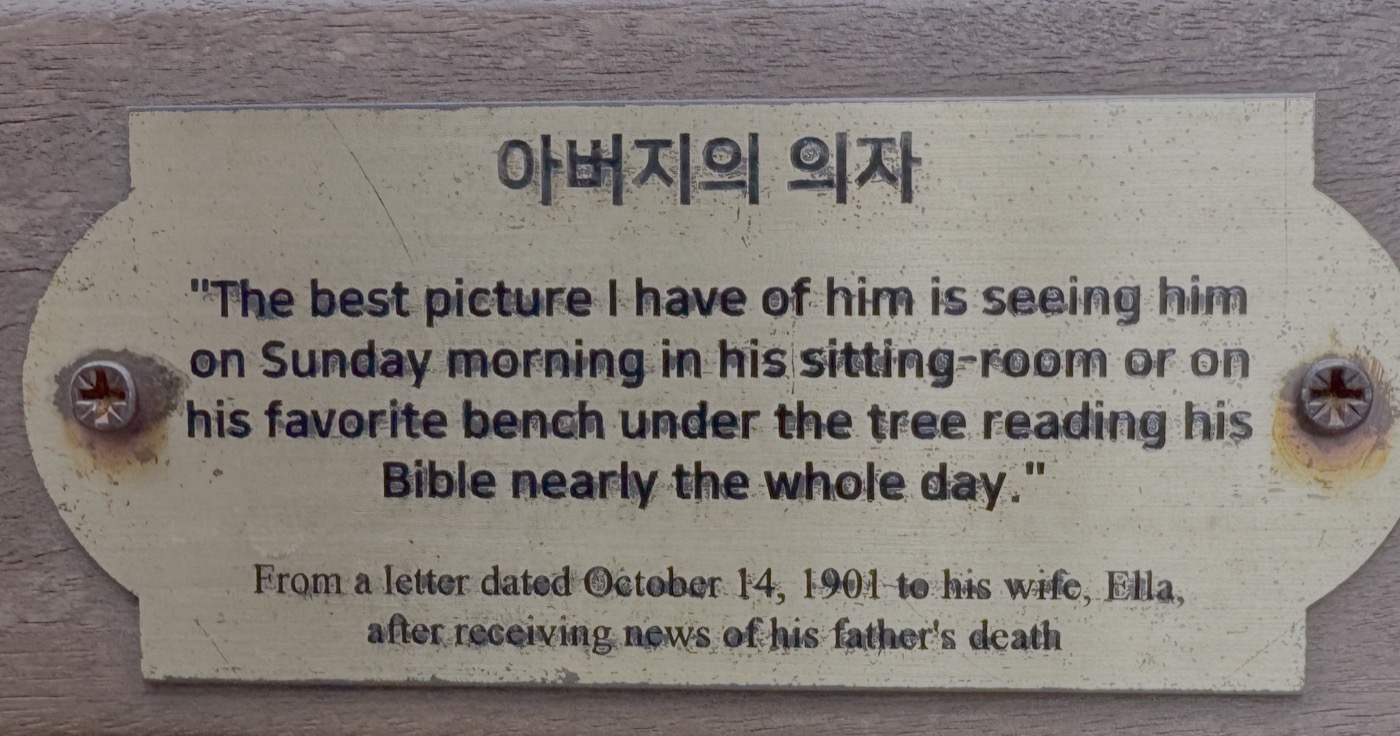
"The best picture I have of him is seeing him on Sunday morning in his sitting-room or on his favorite bench under the tree reading his Bible nearly the whole day." "제게 남은 아버지의 가장 좋은 모습은, 주일 아침이면 거실에서, 혹은 나무 아래 즐겨 앉으시던 벤치에서, 거의 하루 종일 성경을 읽으시던 모습입니다."
— Henry G. Appenzeller, in a letter to his wife Ella, October 14, 1901, on the death of his father · founder of Pai Chai Hakdang, 1885 — 헨리 G. 아펜젤러가 아버지의 별세 소식을 듣고 1901년 10월 14일 아내 엘라에게 보낸 편지에서 · 배재학당 설립자, 1885
Photograph: Bill R. Majors, 2026 · Quotation corroborated in "The Lord's Supper and the First Korean Methodist Missionary, Henry Gerhard Appenzeller," Methodist History (April 2006); the October 14, 1901 date is as recorded on the plaque. 사진: 빌 R. 메이저스, 2026년 · 이 인용문은 《Methodist History》(2006년 4월호) 논문에서도 확인됩니다. 1901년 10월 14일이라는 날짜는 명패에 기록된 대로입니다.
One Book, Many Readings 한 권의 책, 여러 개의 독법
Almost everyone in Korea reaches for the same book. What differs is how it is read. 한국에서는 거의 모두가 같은 책을 찾습니다. 다른 것은 그것을 읽는 방식입니다.
The mainstream churches share largely the same text: Protestants read chiefly the 개역개정 (Gaeyeok Gaejeong) (1998); Catholics read the 성경 (Seonggyeong) (2005), from the original languages. The two traditions even translated one Bible together once — the 공동번역 (Gongdong Beonyeok) (1977) — now used mainly by Korea's Anglican and Orthodox churches. 주류 교회들은 대체로 같은 본문을 공유합니다: 개신교는 주로 개역개정(1998)을, 가톨릭은 원어에서 번역한 성경(2005)을 읽습니다. 두 전통은 한때 함께 성경을 번역하기도 했습니다 — 공동번역(1977) — 지금은 주로 한국 성공회와 정교회가 사용합니다.
Ask the Museum Guide for more on any of these — names, dates, and specifics are held there, not on this wall. 각각에 대한 더 자세한 내용은 박물관 안내자에게 물어보세요 — 이름과 연도, 세부 사항은 이 벽이 아니라 안내자가 담고 있습니다.
The Bible's reach in Korea is heritage and cultural influence in a plural, secular society — inclusive of all, exclusive to none. This museum reports; it does not persuade. 한국에서 성경이 미친 영향은, 다원적이고 세속적인 사회 속의 유산이자 문화적 영향력입니다 — 모두를 품되 누구도 배제하지 않습니다. 이 박물관은 기록할 뿐, 설득하지 않습니다.
Korea is constitutionally secular, and its people are today majority non-religious. 대한민국은 헌법상 정교분리 국가이며, 오늘날 국민 다수는 특정 종교가 없습니다.